
Issue #88: Getting on board
Uplifting stories from my old home town

In our recent Issue 86, Robyn wrote about the value of telling stories. Well, here’s a few positive stories from the central western NSW town I grew up in: Wellington.
As is typical of many regional towns, it was until recently a National Party stronghold. But in December 2022, MP Andrew Gee, National Party representative since 2016, resigned from the Nationals. This was largely over his party’s opposition to The Voice, and because the party line didn’t let him advocate sufficiently for his region which had been impacted by unnatural disasters in the form of storms and floods. Then, in the 2025 election he won with 56% of the two party preferred vote over the National Party challenger. I reckon any win over the climate change-denying, fossil fuel-supporting ‘country’ party is a good story!
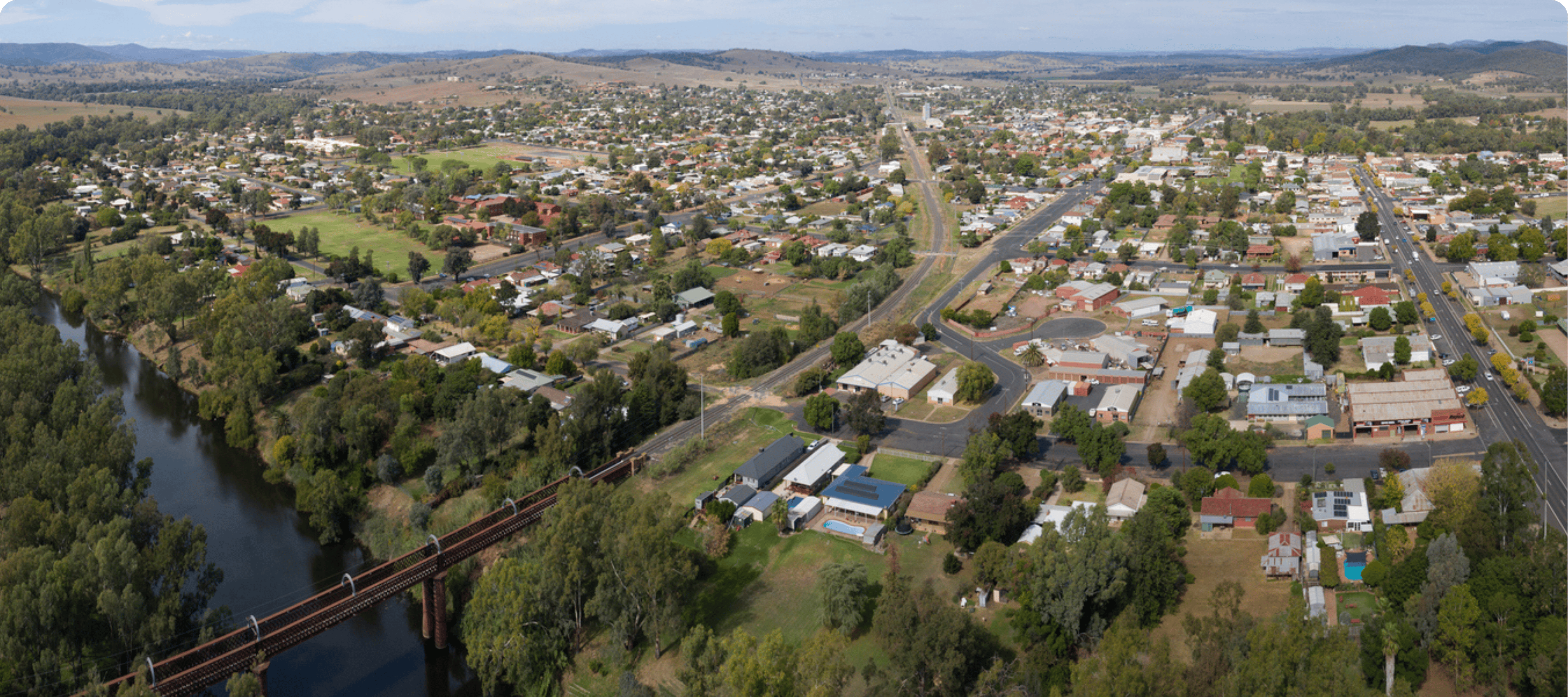
And then there’s Wellington’s story about renewable energy. The town sits in the heart of Central West Orana Renewal Energy Zone, home of several nearby major projects. These include:
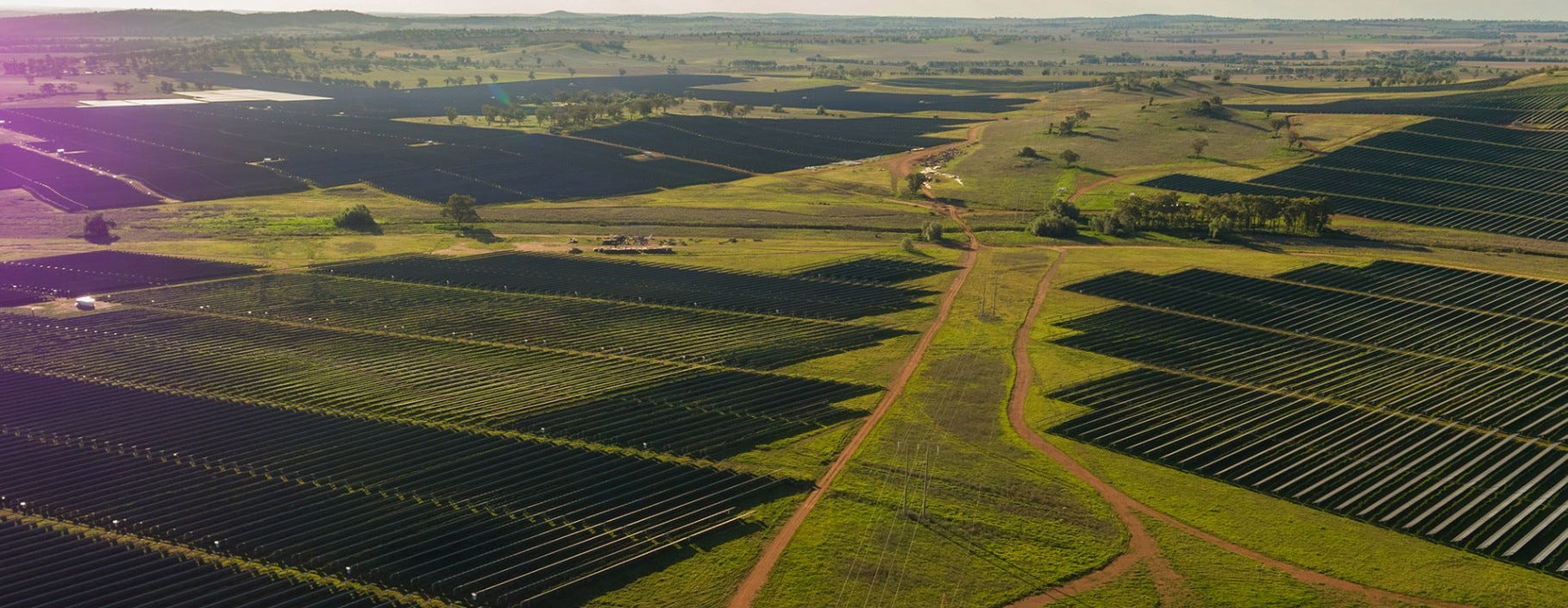
Two enormous operational solar farms, owned by Lightsource bp, a company fully owned by fossil fuel giant BP. Lightsource bp exists as a remnant from the days before BP moved away from investing in renewables to step up investment in oil and gas. No doubt this renewed focus on fossil fuels will suit former Woodside CEO ‘Methane’ Meg O’Neil just fine, as she takes over BP from April.
Wind farms in operation (Bodangra), under construction (Uungula), and approved to begin construction (Spicers Creek). Uungula and Spicers Creek are owned by Squadron Energy, iron ore magnate ‘Twiggy’ Forrest’s renewable energy company.
Bulabul, Orana and Uungula Battery Energy Storage Systems, all in various stages of development.
The Phoenix Pumped Hydro Project, proposed to be built adjacent to Burrendong Dam, where I spent many happy weekends water skiing.
I drove past the Lightsource bp solar farms back in February. The panels stretch for as far as the eye can see. I can empathise with folk who say it’s a waste of productive land (despite solar’s dual-use agricultural benefits), or find negotiating with big companies hard work. But personally, I find a coal mine much more ugly.
Farmers for Climate Action loves to highlight positive stories about renewable energy and farming successfully coexisting:
Wellington grazier Simon Barton: “Renewable energy payments are the main source of income on our family farm now. The wind turbine income has been vital for us,” Mr Barton said.
Wellington fine wool farmer Tony Inder: “The sheep I graze under the solar farm produce better wool, I think because there’s more even nutrition given the panels create shade in summer and provide a wind break in winter. My sheep are part of a study investigating this. Farming helps renewables and renewables help farming.”
Finally, two stories about good community engagement.
Wellington lies on the lands of the Wiradjuri, one of the largest First Nations lands in Australia. I attended High School with many Aboriginal kids, but nothing was taught about their culture. I am in awe that the Wiradjuri somehow hung onto their culture, despite colonial attempts to erase it. These days, Wiradjuri is celebrated, with many schools including Wellington teaching the language.
AMPYR Australia, the company establishing the Bulabul Battery, has entered into an equity agreement with the Wellington Wiradjuri community (Wambal Bila), including providing up to $300,000 to help Wambal Bila establish its initial operations. As well as giving a sense of ownership, the project could deliver $20-$30 million in revenue to the community over the 25-year lifespan.
High on the hill behind Wellington, just below the old unused District Hospital (crikey, where I was born😧😂), sits another unused building, the former Bellhaven Aged Care Home. Unused for not much longer. Squadron Energy’s Uungula project will employ local tradies to refurbish it to house renewable energy construction workers. And when the facility is no longer required, it will be returned to the property owner to be reused for alternative purposes, hopefully local housing!

It’s enough to leave me feeling nostalgic and proud about Wellington!
Enough nostalgia. We have work to do (unfortunately a lot), petitions to sign, letters to write.
What can you do today?
Our last newsletter had a pleasingly high number of folk following our links, perhaps responding to Malcolm’s call to focus on the good stuff. Keep it up!
🐝 If you have 5 minutes:
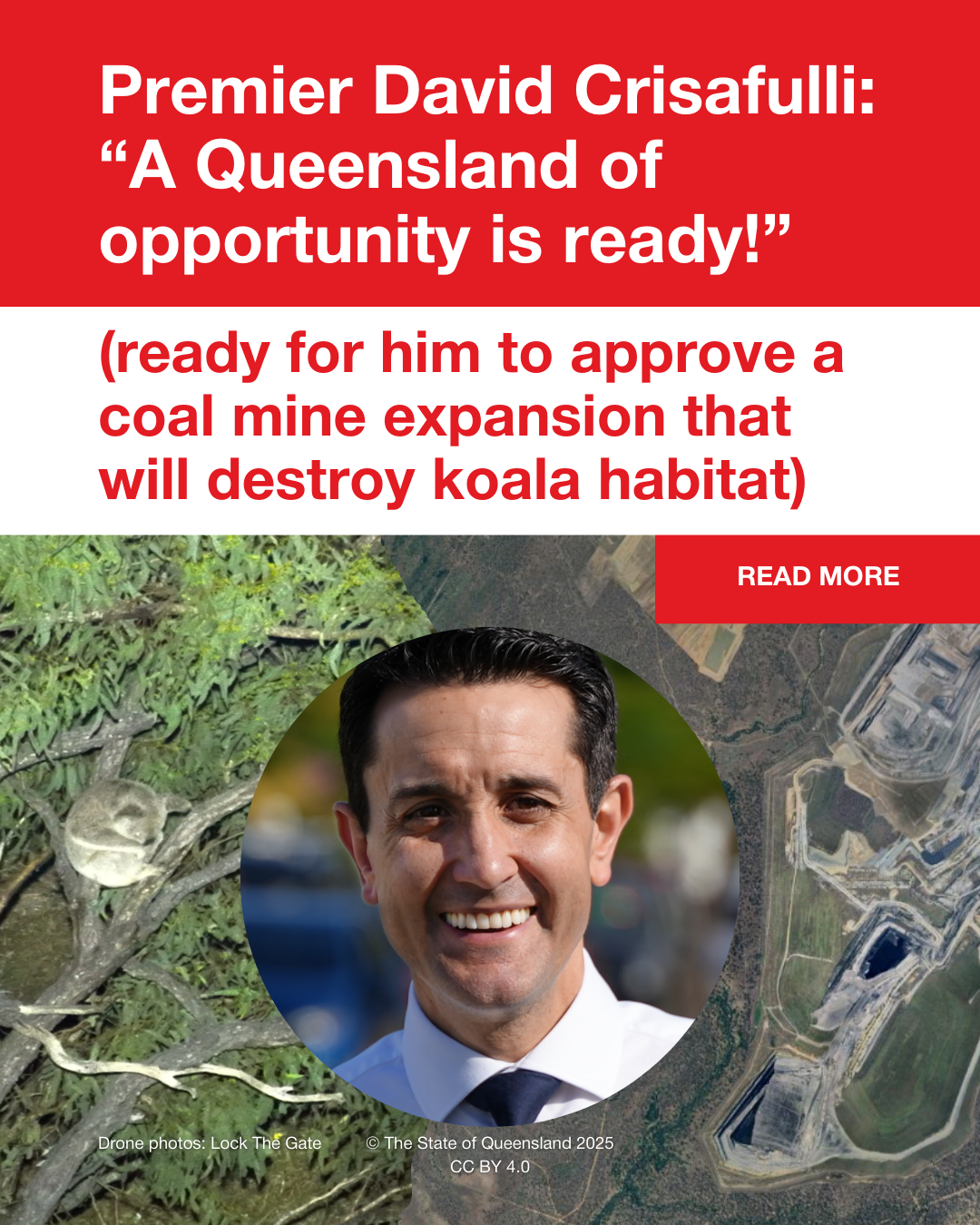
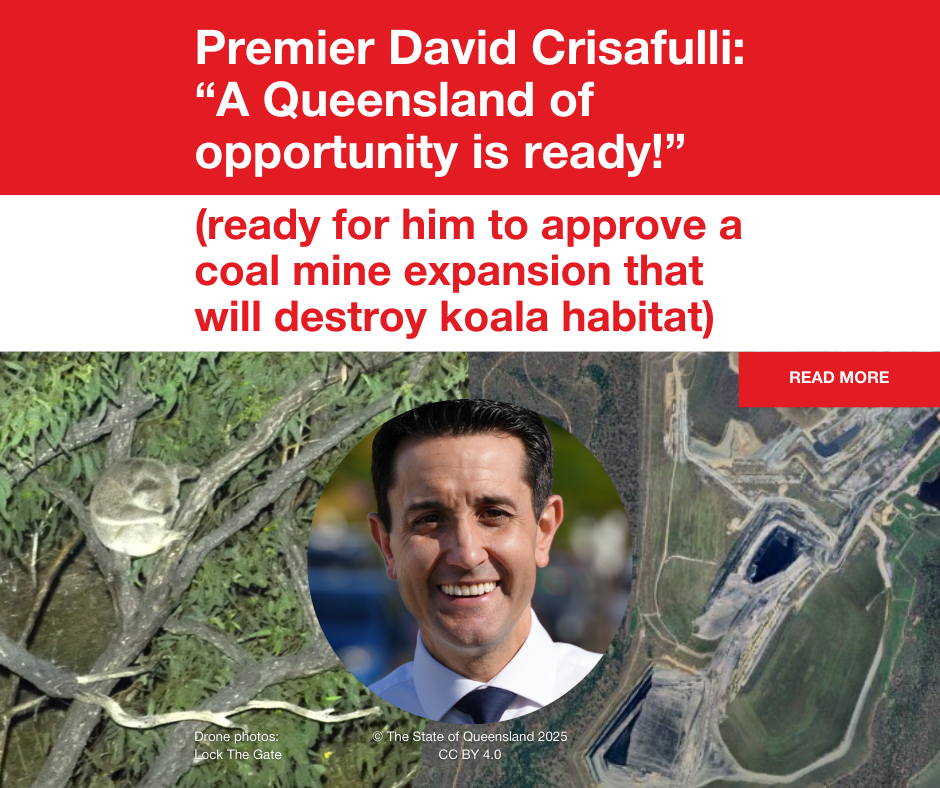
Despite our readers and more signing an open letter to the Qld Government asking them to reject Glencore’s Hail Creek mine (Issue 75 August last year), the Crisafulli Government has approved it. The project will bulldoze 600 hectares, home to a nationally significant koala population; mine coal until 2040; and threaten water resources.
Action: Share QCC’s graphic: farcebook, Insta, download Insta graphic, download FB graphic
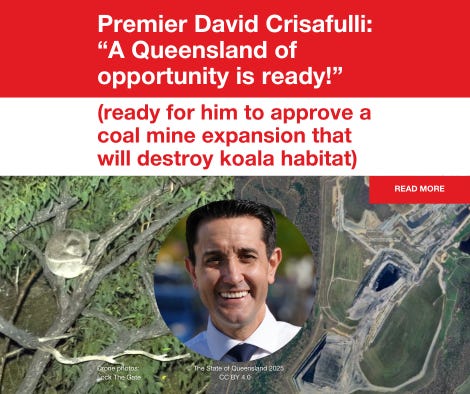
BHP plans to build a huge new underground coal mine, Saraji East, in Central Queensland. The mega-mine would destroy koala and greater glider habitat, and put more pressure on Queensland’s precious water resources.
Action: Ask Premier Crisafulli and the Qld Government to stop this reckless destruction by using the email template. Please add your own unique subject line so that we generate lots of unique submissions.
Darwin’s proposed Middle Arm industrial precinct will be built around existing industrial facilities such as the Santos liquefied natural gas tank (secretly leaking methane for 20 years). But it will level more bushland, dredge Darwin Harbour, pollute its seas, and ruin its coastline; as well as being vital to the Beetaloo Basin gas fracking project. Our most recent examination of this project was in Issue #58 Nov 2024, where we reported that Infrastructure Australia had rejected the NT Government’s business case. But in more recent framing, I found it is described as the “Middle Arm sustainable development precinct”; a project “focussed on renewable energy, low emission liquefied natural gas, carbon capture utilisation and storage, minerals processing and hydrogen.” Talk about greenwash! 🤮 Although still in the planning and design stage, it remains on Infrastructure Australia’s priority list, so we need to keep up the pressure to stop this project.
Action: Add your name with 2,500 others to petition the Federal Government to withdraw $1.9 billion in public funding from the May 2026 Federal Budget. A delegation of First Nations and Pasifika land and sea protectors will deliver the petition to Canberra in May and they need at least 3,000 signatures.
Parents for Climate has invited Federal Members of Parliament and Senators to an event at Parliament House on 1 April, where they will promote the need for solar and batteries to be installed at schools. Show your MP and Senators that you care and want them to attend.
Action: Add your name (before 1 April) to a letter which will be sent to your MP and Senators. You don’t need to be a parent: every community member knows someone connected with a school.
In January’s Issue 84, we promoted the Extreme Heat Awareness Day stall hosted by Cairns and Far North Environment Centre at the Cairns Esplanade. CAFNEC had a lot of folk sign their petition to get State Planning Policy to consider heat risk alongside floods, bushfires and cyclones – ensuring all future development supports healthy, resilient communities in a warming climate.
Action: Sign the Parliamentary Petition, which is open to all Queenslanders, closing 4 May.
The Federal Government is reviewing the Electric Car Discount — a policy that has helped make cleaner, cheaper electric vehicles more accessible for over 100,000 Australians. The Policy exempts Fringe Benefits Tax on EVs purchased through salary packaging or via a novated lease; and removes import tariffs, reducing the upfront cost of purchasing an EV.
Action: Make a submission to Defence Minister Richard Marles and Transport Minister Catherine King by sending Solar CItizen’s default submission, or better still, craft your own.
🐇 If you have 15 minutes:
The annual Mission Australia Youth Survey opens from Thursday. Not specifically a climate-related action, but more than 17,000 young people aged 14 to 19 took part in the 2025 survey. They told us the most important issues for Australia were:
Cost of living 64%
Mental health 29%
Climate change and the environment 27%
Housing and homelessness 25%
Action: If you are in, or know someone who is in, that age bracket, do the 2026 survey. Mission Australia is listened to by all levels of Government, so make yourself heard.
💃🏽 If you have 30 minutes or more:
The Bob Brown Foundation is coordinating the annual March for Forests this Sunday, calling for an end to native forest logging.
Action: If you haven’t already replied (in our last newsletter), then RSVP to let the organisers know you are coming, or just turn up. City Botanic Gardens, Sunday 22 March @ 10am, followed by a short march to 1 Eagle St outside Murray Watts’ office.
Australia is facing an extinction crisis, yet nature receives just 0.1% of the federal budget. Join the national webinar to launch the 1% for Nature campaign - a growing movement calling for a fair go for nature: at least 1% of the federal budget to be invested in protecting the places and wildlife we love.
Action: RSVP for the webinar, Tuesday 24 March at 6pm (Qld time)
The single most effective way to cut climate emissions is to phase out coal and gas. You can’t put out a fire by pouring petrol on it. Bushfire Survivors for Climate Action and Climate Action Network Australia are asking for local climate champions to meet Labor MPs and senators by Easter (Thurs 2 April).
Action: Send an email to angela@bushfiresurvivors.org to receive resources to help you prepare for a meeting with your local Labor parliamentarian. You will receive a template meeting request email/phone script; an agenda template to keep the conversation focused; a briefing on key policy asks and messages; and some background on the parliamentarian you’re meeting.
🦋Make Polluters Pay
Who should pay for climate damage - communities or big polluters?
Last week Tipping Point hosted a webinar, attended by 250 concerned people, to launch the Australia-wide Make Polluters Pay campaign, calling for a Climate Compensation Fund paid for by coal and gas corporations. This well-planned campaign starts with a call to local councils to support a motion for such a Fund. Already, attendees have committed to start the work to sway 69 local councils, in all States and Territories of Australia. This is going to be a long campaign, with plenty of support from many like-minded people.
View the very informative slides from the presentation
Sign up to join a team to adopt your local council. You won’t be on your own.
RSVP to online training:
Getting your Council Campaign Started - Wednesday 25 March
How to Have Powerful Survey Conversations - Wednesday 15 April
🎉🎉🎉🎉
Not all stories have a happy ending. After years of work by dedicated locals, the Narrabri Community Battery project is all but dead. Council voted it down, following a presentation by a Fire and Rescue NSW Zone Commander who conflated e-scooter lithium-ion battery fires with the much rarer Battery Energy Storage System fires. Battery Energy Storage Systems have many fire safety controls, but this made no difference to the fear-mongering that ignited with more heat than an oil refinery fire. 67 letters in support of the project made no difference. (My letter sold the economic and tourism benefits of being a community trail-blazer).
But Sally Hunter, local farmer and driving force behind the battery project, isn’t doing nothing. She aims to lead a mammoth horseback trek along the 400-kilometre route of Santos' proposed Hunter Gas Pipeline from Narrabri through the Liverpool Plains to near Newcastle. Go Sally!
That’s all for today, folks 👋🏽 Thanks for taking action.
See you in two weeks
Ron, Robyn and Malcolm - The Climate Club Qld team
Were you forwarded this email? Subscribe here for more!
We live, work and play on the lands of the Yuggara and Turrbal people in and around Magandjin - Brisbane. We pay respect to their Elders, past and present, and acknowledge that sovereignty was never ceded - always was, always will be Aboriginal land.
To help keep these newsletters useful, we’d love your feedback and you can always get in touch by email climateclubqld@gmail.com or check out the simple info on our About page.